How to Use Tianeptine Sulfate for Mental Health Support?
Mental health conditions are increasingly recognized as a global issue. According to the World Health Organization, approximately 1 in 4 people will experience a mental health challenge at some point in their lives. This rising concern has spurred research into various treatments, including alternatives like Tianeptine Sulfate.
Tianeptine Sulfate is gaining attention for its unique mechanism. Unlike traditional antidepressants, it acts on the glutamate system. Studies show it can improve mood and cognitive function. However, understanding its application is crucial. Misconceptions about its efficacy exist. Not everyone will respond similarly to this compound.
Some users report positive changes quickly, while others may find no relief. Personal experiences vary widely. Tianeptine Sulfate presents both hope and uncertainty. Its potential benefits must be weighed against the need for responsible use. Informing oneself is essential to navigate this complex landscape. Mental health support is not a one-size-fits-all scenario.

Understanding Tianeptine Sulfate and Its Mechanism of Action
Tianeptine sulfate is a unique compound that has attracted attention for its potential mental health benefits. It acts on the brain differently from traditional antidepressants. This difference lies in its ability to modulate glutamate levels. Glutamate is crucial for mood regulation and cognitive functions. Tianeptine may enhance signaling pathways in the brain. This could lead to improved emotional resilience.
Research indicates that tianeptine sulfate can influence neuroplasticity. Neuroplasticity is the brain's ability to adapt and form new connections. This property may be beneficial for individuals facing stress or anxiety. Some reports suggest it may reduce feelings of sadness. Others describe a potential increase in motivation. However, not everyone experiences these effects. Individual responses vary widely.
It’s important to be mindful when using tianeptine sulfate for mental health. While some find relief, others report side effects or no benefits. Self-reflection is key. Regular monitoring of mental health status is essential. Understanding one’s personal reaction to this compound can guide effectiveness. It’s a journey, not a one-size-fits-all solution.
How to Use Tianeptine Sulfate for Mental Health Support?
| Aspect |
Details |
| Usage |
Typically administered in doses ranging from 12.5 mg to 25 mg, taken 1 to 3 times daily. |
| Mechanism of Action |
Modulates the glutamatergic system and enhances neuroplasticity by acting on μ-opioid receptors. |
| Potential Benefits |
May reduce symptoms of anxiety and depression, improve mood, and enhance overall cognitive function. |
| Side Effects |
Possible side effects include dizziness, gastrointestinal disturbances, and in rare cases, dependence. |
| Considerations |
Consult with a healthcare professional before starting and avoid combining with other CNS depressants. |
| Research Status |
Ongoing studies are investigating its full range of effects and long-term safety profile. |
Potential Mental Health Benefits of Tianeptine Sulfate
Tianeptine sulfate has gained attention for its potential mental health benefits. Many users report improved mood and reduced anxiety. Some studies suggest it may enhance emotional resilience. This compound appears to regulate certain neurotransmitters. This regulation could lead to better stress management and emotional stability.
Despite the positives, using tianeptine sulfate isn't risk-free. Some may experience side effects like dizziness or fatigue. Individual responses can vary greatly. It's crucial to approach with caution. Reflecting on personal needs and experiences can guide usage. Listening to one’s body while exploring options is essential.
Incorporating tianeptine sulfate into daily routines may require adjustments. Finding the right dosage can take time. Alignment with personal mental health goals is vital. Each person's journey is unique, and awareness of potential pitfalls is necessary. The path to mental well-being often involves trial and error.
Recommended Dosage and Administration of Tianeptine Sulfate
When considering the use of tianeptine sulfate for mental health support, understanding the correct dosage and administration is crucial. Many people are unsure about how much to take. The typical recommended dosage ranges from 12.5 mg to 50 mg per day. Start low and slowly increase if needed. This approach helps to minimize potential side effects.
It’s essential to take tianeptine sulfate consistently. Taking it at the same time every day can help maintain stable levels in your system. Some users recommend splitting the daily dose into two parts. This method may enhance its effects throughout the day. However, individual responses can vary widely. Not everyone may experience the same benefits or side effects.
Monitoring your body’s response is vital. Some might feel improvements quickly. Others may notice subtle changes over time. Keep a journal of your experience. Note any mood changes or side effects. This reflection can inform future decisions and dosage adjustments. Remember, every person’s mental health journey is unique. Listen to your body, and do not rush the process. This path requires patience and awareness.
Possible Side Effects and Risks Associated with Tianeptine Sulfate
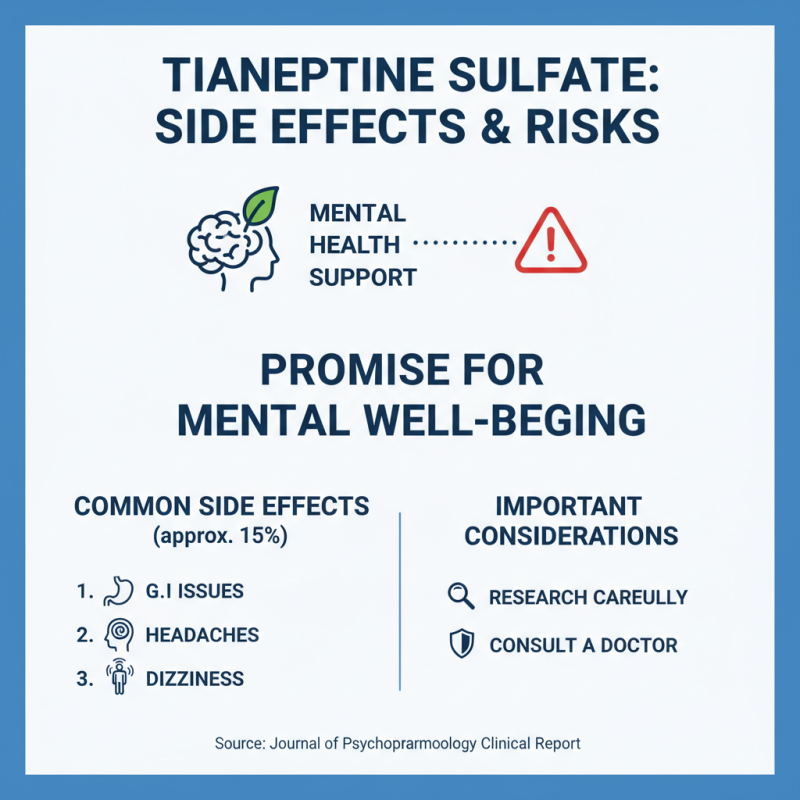
Tianeptine sulfate shows promise for mental health support, but it is essential to consider its side effects and risks. Research indicates that some users report mild side effects such as gastrointestinal issues, headaches, or dizziness. A clinical report from the Journal of Psychopharmacology indicated that around 15% of participants experienced these symptoms during trials.
More concerning is the potential for dependency. Data from a neuroscience research group found that some individuals developed a tolerance after prolonged use. Users often reported an increase in dosage over time to achieve the same effects. This raises questions about long-term safety and the implications of extended use on mental health.
While many turn to tianeptine sulfate seeking relief, lingering doubts remain. Reports suggest that withdrawal symptoms can mimic those of traditional opioids, including anxiety and mood swings. The lack of comprehensive studies on tianeptine's long-term effects leaves a gap in our understanding. Individuals must approach its use cautiously, weighing potential benefits against risks.
Guidelines for Safe Use and Consultation with Healthcare Professionals
When considering tianeptine sulfate for mental health support, consulting with healthcare professionals is essential. This compound can have varying effects on individuals. A healthcare provider can help you understand if it is suitable for you. They can also monitor your progress and adjust your dosage as needed.
Tips for safe use include starting with the lowest effective dose. This can help gauge how your body reacts. Always keep a daily journal of your mood and side effects. Documenting your experience will provide valuable insights for future consultations. It is also vital to discuss any other medications you are taking. Interactions can complicate treatment.
Be aware of potential risks and side effects. Some people experience dependency, which warrants caution. Do not self-medicate or adjust doses without guidance. Communication is key. Transparency with your provider fosters a safer and more effective approach to mental health support.