Leave Your Message

7 Best Nootropics Powder Suppliers for Global Buyers

Global buyers assessing Nootropics Powder suppliers need more than an attractive catalog and a quick quote. They need clear product specifications, consistent communication, and documentation that can be reviewed before an order is placed. A polished website is useful, but it cannot confirm how a supplier handles testing, batch records, or shipping questions. Ask for current certificates of analysis, ingredient details, and traceability information, then check that the documents match the product being offered.

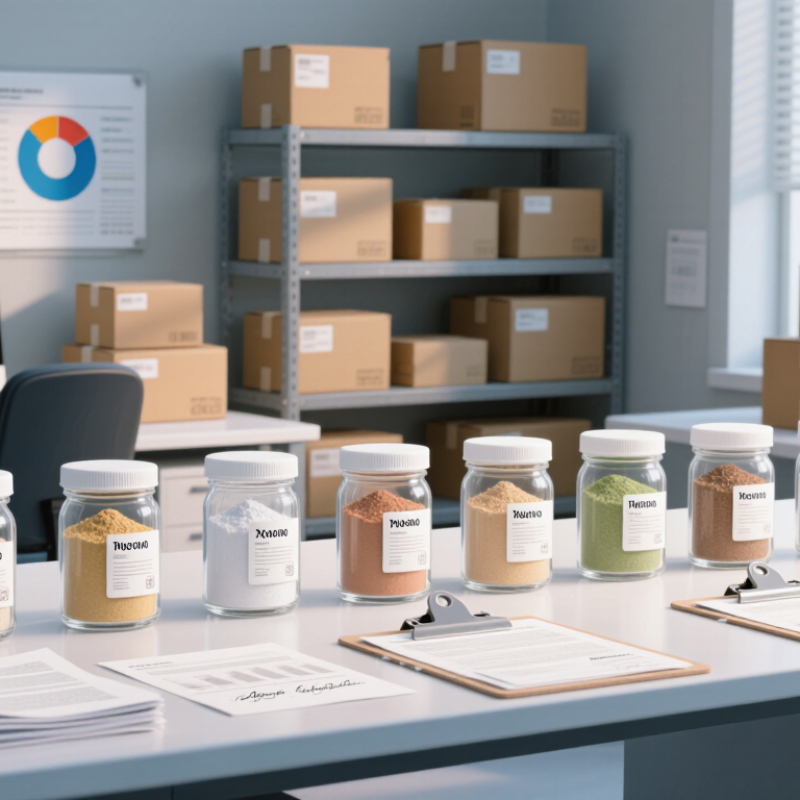
Small details matter. A sample jar with a readable batch code, a sealed inner liner, and a prompt answer about storage can reveal how carefully a supplier manages routine work. This guide compares seven suppliers through practical considerations such as product range, quality documentation, customization, minimum order quantities, and international logistics. Buyers should also verify whether product claims and documentation fit the requirements of their intended market, consulting qualified professionals where needed. No supplier is a perfect fit. Even a careful checklist can miss problems that appear only after repeated orders, so communication and follow-up deserve attention. The goal is not to promise results or endorse every listing, but to help buyers ask sharper questions and make a more informed shortlist.
7 Best Nootropics Powder Suppliers for Global Buyers

What Nootropic Powders Are and How Global Sourcing Works

Nootropic powders are powdered ingredients marketed for cognitive support, such as attention or memory. The term covers different materials, not one standardized product. Composition, processing, and evidence can vary widely. Some proposed benefits remain uncertain. That distinction matters.

Global sourcing starts with a clear specification: ingredient identity, grade, particle size, and packaging needs. Buyers can request a recent certificate of analysis and ask which tests confirm identity, potency, and contaminant limits. Check whether testing comes from a qualified independent laboratory. Paperwork helps, but it does not guarantee every shipment matches the sample. A neat document is not proof.

International orders also involve shipping conditions, shelf life, customs paperwork, and destination-specific rules. Requirements may differ between countries and can change, so buyers should verify them with qualified local advisers before placing an order. Ask how the supplier handles moisture protection, batch traceability, and damaged packaging. Requesting a small sample can reveal texture, odor, and handling issues, though it cannot replace laboratory testing. Sourcing takes patience. One overlooked detail can delay a shipment or complicate quality checks.

Key Criteria for Evaluating Nootropic Powder Suppliers

For global buyers, supplier evaluation should begin with evidence, not polished sales language. The Council for Responsible Nutrition’s 2023 Consumer Survey found that 74% of U.S. adults use dietary supplements. This broad demand makes batch consistency important. Ask for a lot-specific certificate of analysis, not a generic sample. Check identity, potency, microbial limits, and heavy metals against documented specifications.

Review how the supplier controls production. Request current GMP documentation, audit details, raw-material traceability, and change-control procedures. For powders, ask about moisture limits, particle-size range, and stability data; these details can affect handling and repeatability. Verify that testing methods suit the ingredient and that results come from qualified laboratories. A certificate alone is not proof of every quality claim. Some documents look complete but leave gaps.

Tip: Request two recent batch records and compare key results. Ask how deviations are investigated. Clear answers matter. If a supplier cannot explain a failed test plainly, pause before scaling an order.

Seven Nootropic Powder Suppliers for International Buyers

International buyers can compare seven useful supplier profiles: specialists in botanical extracts, standardized single-ingredient powders, custom-blending manufacturers, bulk ingredient distributors, small-batch producers, private-label processors, and suppliers focused on analytical documentation. These are different capabilities, not automatic measures of quality. Ask what each supplier actually manufactures and what it sources from elsewhere.

Request a recent certificate of analysis for the exact ingredient and batch. Check identity, stated potency, microbial limits, heavy metals, and residual solvents where relevant. Ask whether an independent laboratory performed the tests, and how samples are stored. Good answers should be specific. Vague assurances are not evidence.

Then inspect practical details: minimum order size, lead time, packaging protection, and export paperwork for your destination. A sealed sample should match the documentation and arrive without moisture damage or an unusual odor. Small details matter. Compare at least two batches when possible; consistency can take time to assess. A polished catalog can still leave questions unanswered. I would not treat a low price or fast reply as proof of reliability. Supplier records, traceable batch numbers, and clear communication offer a more grounded basis for choosing among international options.

Comparing Product Quality, Certifications, and Shipping Options

A useful comparison of seven nootropics powder suppliers starts with evidence, not polished product pages. Request a current certificate of analysis for the exact batch under review. It should identify the ingredients, test methods, and results, rather than offer broad quality claims. Independent testing can help verify identity and screen for contaminants. Details matter. A sample report should be readable, dated, and traceable to its lot number.

Certifications need context. Check who issued them, what facility or process they cover, and whether they remain current. A quality-management certificate does not automatically prove that every powder has been independently tested. Ask about ingredient sourcing, allergen controls, and storage conditions. Where information is missing, record that gap instead of treating silence as proof of poor quality. Or good quality. The distinction can be frustrating.

Shipping options affect product condition and delivery planning. Compare dispatch times, tracking, protective seals, moisture-resistant packaging, and temperature controls when relevant. Confirm that the supplier can provide the documents needed for your destination and that its stated shipping routes are currently available. Reliable support should answer specific questions, not just promise fast delivery. A neat comparison table helps, though it cannot capture every delay or batch variation. Supplier information can change, so verify key details before placing an order.

7 Best Nootropics Powder Suppliers for Global Buyers - Comparing Product Quality, Certifications, and Shipping Options
Supplier Profile Typical Powder Range Quality Checks to Request Certifications to Verify Common Shipping Options Best Fit for Buyers Important Considerations
Specialty amino-acid powder manufacturer L-theanine, L-tyrosine, and other amino-acid ingredients, subject to local regulations and availability Batch-specific certificate of analysis (COA); identity and assay testing; heavy-metal and microbiological results; allergen and residual-solvent information where applicable Ask for current, site-specific GMP and ISO 9001 documentation; verify scope and issuing body. Food-safety certifications may also be relevant. Courier samples; air freight for smaller commercial orders; sea freight for larger consignments Buyers prioritizing single-ingredient powders and batch documentation Specifications, permitted uses, and labeling rules vary by ingredient and destination market.
Botanical-extract powder producer Standardized botanical extracts commonly used in supplement formulations Botanical identity; plant part; extraction solvent; marker-compound assay; pesticide, microbial, and heavy-metal testing; traceability records Verify applicable GMP, food-safety, organic, or sustainability certificates directly with the issuer; certification does not automatically establish product efficacy. Courier or air freight for samples and urgent orders; sea freight for bulk shipments Brands and formulators seeking plant-derived ingredients with defined specifications Request the botanical name, plant part, extract ratio, and test method; avoid relying on extract ratio alone as proof of potency.
Standardized-extract and fermentation ingredient supplier Selected standardized or fermentation-derived ingredients, depending on production capability Identity, assay, impurity profile, residual solvents where relevant, microbial limits, and validated or clearly described analytical methods Request current GMP and quality-management certificates, plus documentation of the manufacturing site and product scope. Air freight is common for high-value, lower-volume goods; sea freight may suit larger orders Buyers requiring defined assay levels and consistent batch specifications Confirm whether the supplier manufactures the ingredient or resells it, and request origin and traceability details.
Custom-blending and contract-manufacturing supplier Pre-blended powders made to an agreed formula, subject to ingredient and regulatory review Blend-uniformity plan; incoming-material checks; finished-batch COA; allergen controls; packaging and shelf-life data Verify facility-specific GMP and food-safety certifications, their current status, and whether they cover blending and packing. Courier samples; air or sea freight for finished bulk goods; export documentation depends on destination Buyers who need a custom blend rather than individual raw materials Confirm minimum order quantity, formula ownership, change-control procedures, and responsibility for destination-market compliance.
Small-quantity ingredient distributor Catalog powders sold in smaller pack sizes, depending on stock and local availability Supplier and manufacturer traceability; lot-specific COA; sealed packaging; storage conditions; expiry or retest date Request certificates for the actual manufacturing or distribution site; check whether documents apply to the product being purchased. Parcel courier is commonly used; delivery times and import charges depend on the destination Product developers, laboratories, and buyers conducting early-stage evaluations Check whether the material is food-grade and intended for the proposed use; small-pack availability does not establish regulatory suitability.
Bulk raw-material exporter Commodity and specialty powders supplied in bulk packaging when available Batch COA; identity and purity results; contaminant testing; packaging integrity; lot traceability and storage records Verify current GMP or food-safety certificates, facility details, and any export or product-specific documents required by the destination. Sea freight is often economical for larger orders; air freight may be available at higher cost Established importers and manufacturers with bulk purchasing and quality-control processes Agree on Incoterms, insurance, customs responsibilities, sampling, and acceptance criteria before placing an order.
Regional stockholding distributor Selected powders held in regional inventory; range and stock status vary by market Lot-specific COA; storage and transport conditions; inventory age; traceability from manufacturer to buyer Check certificates for both the manufacturing site and, where relevant, the distributor’s handling or storage operations. Domestic parcel or pallet delivery; regional courier or freight options may reduce transit time Buyers prioritizing shorter lead times and local support Confirm real-time stock, remaining shelf life, local import status, and whether the distributor can provide original manufacturer documentation.

Comparison note: These are generalized supplier profiles, not verified company listings or guarantees of product availability, certification, quality, or delivery. Certifications and shipping options must be checked with each supplier for the specific product, manufacturing site, order, and destination. Buyers should independently verify documentation and applicable import, food, and supplement regulations.

How to Verify a Supplier and Choose the Right Partner

A reliable nootropics powder supplier should make verification straightforward, not merely promise quality. Request a recent certificate of analysis for the exact product lot. Check whether it identifies the tested material, methods, results, and laboratory. Independent testing can add confidence, but confirm the report directly with the laboratory when possible. A polished PDF is not proof by itself.

Ask how raw materials are traced from receipt to finished batch. Review documented procedures for identity testing, contamination controls, storage, and lot records. A small sample can reveal practical details: Does the powder match its specification? Is the packaging sealed and clearly labeled? Sample testing is useful, but it cannot replace ongoing quality checks. No shortcut works.

The right partner should communicate clearly about lead times, minimum order quantities, shipping conditions, and documentation for your destination market. Verify applicable requirements with qualified local advisers; rules can differ by country and product classification. Ask how deviations are investigated and how customers are notified. Vague answers matter. I would also compare the supplier’s response after a difficult question, not just its sales pitch. No checklist is perfect, and real sourcing decisions can still involve trade-offs. A careful process makes those trade-offs easier to see.

7 Best Nootropics Powder Suppliers for Global Buyers — How to Verify a Supplier and Choose the Right Partner

A practical, suggested weighting for comparing potential suppliers. Score each supplier against the same evidence-based criteria before making a decision.

How to use this chart: The percentages are a suggested buyer scoring framework, not survey findings or a universal standard. Request relevant records, such as product specifications, batch-specific test reports, manufacturing and quality-system documentation, and traceability details. Verify certificates and claims with the issuing organizations, and check requirements in the destination market.