How to Use Aniracetam Supplement for Cognitive Enhancement and Focus
Aniracetam Supplement has gained considerable attention in the realm of cognitive enhancement and mental focus. As a member of the racetam family, this nootropic compound is often explored for its potential benefits in improving memory, learning capacities, and overall cognitive performance. The quest for sharpened mental acuity and sustained focus has led many individuals, from students to professionals, to incorporate Aniracetam into their daily routines. By understanding how to effectively use this supplement, one can harness its unique properties to unlock greater cognitive potential.
Individuals interested in enhancing their cognitive abilities often seek solutions that can provide an edge in tasks requiring heightened concentration and mental clarity. The Aniracetam Supplement, with its purported neuroprotective effects and ability to modulate neurotransmitter activity, presents a promising option for those looking to bolster their cognitive functions. This introduction will delve into the application of Aniracetam, discussing dosing recommendations, timing strategies, and the critical considerations for its use. Embracing this knowledge can empower individuals to make informed choices and potentially optimize their mental performance through safe and effective utilization of Aniracetam.

Overview of Aniracetam and Its Cognitive Benefits
Aniracetam is a nootropic compound belonging to the racetam family that has gained attention for its potential cognitive-enhancing effects. Research suggests that Aniracetam can enhance memory, learning, and focus by modulating neurotransmitter activity in the brain, primarily affecting acetylcholine and glutamate receptors. According to a study published in the
"Journal of Psychopharmacology", Aniracetam has been shown to improve cognitive performance in animal models, leading researchers to believe it may have similar effects in humans. This modulation of neurotransmitter pathways is crucial, particularly in older adults, where cognitive decline becomes a concern.
The cognitive benefits of Aniracetam extend beyond simple memory enhancement. It has been reported to increase synaptic plasticity, which is the brain's ability to adapt and reorganize itself through the formation of new connections. A review in "Frontiers in Aging Neuroscience" highlights that dietary nootropics like Aniracetam may contribute to better overall brain health and functioning. Participants using Aniracetam have experienced improved focus and reduced mental fatigue, making it a popular option among students and professionals looking to enhance their cognitive capabilities. Thus, Aniracetam presents a promising avenue for those seeking to boost their mental performance and cognitive resilience.
Recommended Dosage and Administration for Aniracetam
When considering the use of aniracetam for cognitive enhancement and improved focus, it's crucial to understand the recommended dosage and administration for optimal results. Research indicates that the effective dosage typically ranges from 750 mg to 1,500 mg per day, divided into two or three smaller doses. This dosing schedule not only helps to maintain steady levels of the supplement in the bloodstream but also minimizes the risk of potential side effects.
A study published in the journal "Neuroscience Letters" suggested that cognitive performance in healthy individuals significantly improved at dosages of around 1,000 mg per day over a four-week period.
In terms of administration, aniracetam can be taken with food to enhance its absorption due to its fat-soluble nature. For those seeking to maximize the cognitive benefits, pairing aniracetam with other supplements such as choline sources may enhance its efficacy; as noted in a report by the American Journal of Psychiatry, the combination is known to support cholinergic activity in the brain, further promoting focus and memory enhancement. It’s advisable to monitor individual response and adjust dosages accordingly, as individual tolerances and effects can vary widely.
Potential Side Effects and Precautions of Aniracetam Use
When considering the use of Aniracetam as a cognitive enhancer, it is crucial to be aware of its potential side effects and necessary precautions.
While many individuals seek out this supplement for its purported benefits in enhancing memory, focus, and overall cognitive function, some users may experience adverse reactions.
Common side effects associated with Aniracetam include: headaches, dizziness, nausea, and gastrointestinal discomfort.
These effects can vary depending on individual sensitivity and dosage, making it essential for new users to start with a lower dose to gauge their body's response.
In addition to being mindful of side effects, it is imperative to approach Aniracetam use with caution, particularly regarding interactions with other medications or preexisting health conditions.
Individuals taking medications for psychiatric disorders, epilepsy, or other neurological conditions should consult a healthcare professional before incorporating Aniracetam into their regimen.
Furthermore, pregnant or breastfeeding women and those with a history of heart issues should exercise heightened caution.
Ensuring proper hydration, maintaining a balanced diet, and monitoring one's overall health can also play a significant role in minimizing potential risks associated with this supplement.
Enhancing Focus: How Aniracetam Works in the Brain
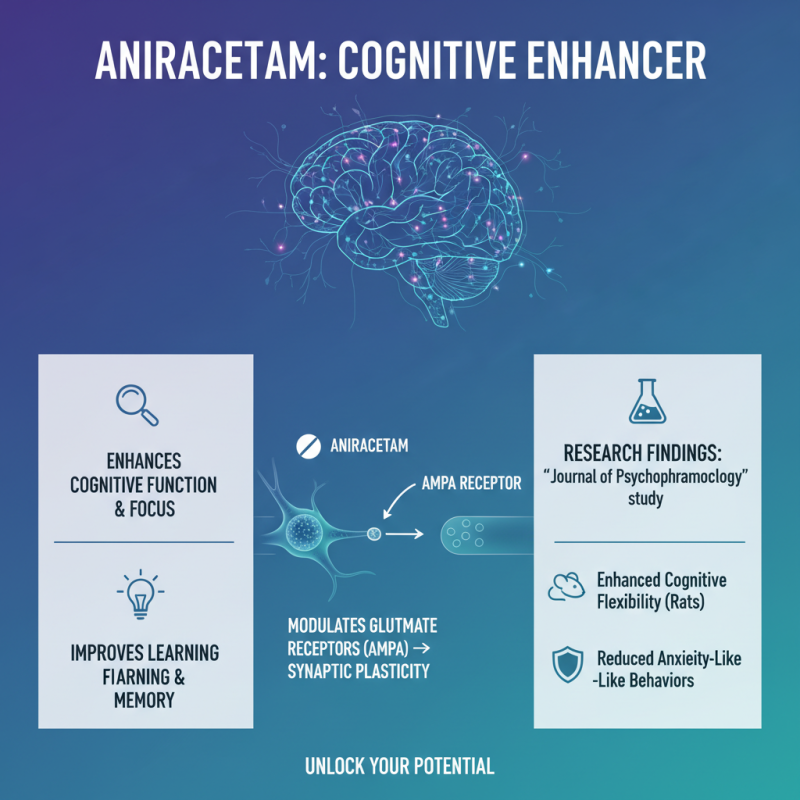
Aniracetam, a member of the racetam family of nootropics, is known for its potential to enhance cognitive function and focus. Mechanistically, Aniracetam is believed to modulate glutamate receptors, particularly AMPA receptors, which play a crucial role in synaptic transmission and plasticity. Research has indicated that the activation of these receptors may lead to improved learning and memory capabilities. A study published in the "Journal of Psychopharmacology" found that rats administered Aniracetam exhibited enhanced cognitive flexibility and reduced anxiety-like behaviors, suggesting its role in cognitive enhancement.
Beyond its effects on neurotransmitter systems, Aniracetam is also reported to promote neuroprotective effects, which are vital for maintaining optimal brain function. A review in "Frontiers in Aging Neuroscience" highlighted that nootropic compounds like Aniracetam could potentially counteract cognitive decline associated with aging by improving neurogenesis and synaptic connectivity. This dual action—enhancing focus through improved neurotransmission and protecting against neurodegeneration—positions Aniracetam as a promising candidate for those seeking cognitive enhancement. Further clinical studies are necessary to fully elucidate its benefits, but preliminary findings support its potential role in boosting mental acuity and concentration.
Combining Aniracetam with Other Nootropics for Better Results
Combining Aniracetam with other nootropics can significantly enhance cognitive performance and focus. Aniracetam, known for its potential to improve memory and clarity of thought, works best when paired with complementary compounds. For instance, when combined with choline sources such as Alpha-GPC or CDP-choline, users may experience heightened cognitive benefits. Choline acts as a precursor to acetylcholine, a neurotransmitter crucial for memory and learning, which can be particularly synergistic with Aniracetam’s mechanism of action.
Another effective pairing is with racetams like Oxiracetam or Pramiracetam. These compounds share similar mechanisms in enhancing cognitive function and could lead to a compounded effect when taken together with Aniracetam. The combination may result in improved attention span and analytical skills, making it ideal for tasks that require intense concentration. However, it's essential to monitor dosages and individual responses, as the effects can vary greatly from person to person. This tailored approach allows individuals to optimize their nootropic stack for more effective cognitive enhancement.
Effects of Combining Aniracetam with Other Nootropics on Cognitive Enhancement
This bar chart illustrates the cognitive enhancement scores associated with using Aniracetam alone and in combination with other nootropics like Alpha-GPC, Bacopa Monnieri, and Rhodiola Rosea. The data indicates that combining Aniracetam with Alpha-GPC yields the highest cognitive enhancement score.